
The IP Strategy & AI Governance Summit: West
Approved for 5.25 CA MCLE Credits !
Innovation is moving faster than the legal frameworks built to manage it, forcing legal teams to rethink how technology is governed, owned, protected, commercialized, and challenged. The traditional separation between IP strategy, AI governance, data risk, privacy, enforcement, and litigation is breaking down. Patent portfolios, trade secrets, proprietary data, AI governance frameworks, vendor agreements, ownership rights, and privacy controls are increasingly part of one connected legal and business conversation.
The IP Strategy & AI Governance Summit brings together senior in-house counsel, chief IP counsel, patent leaders, privacy and compliance professionals, technology counsel, and innovation executives for a single-track program built around that reality. Every session takes place in one room, giving attendees access to the full conversation across IP strategy and AI governance.
The program examines how companies are creating value from IP, protecting against emerging patent and trade secret risks, managing AI-assisted invention and proprietary data, preparing management and boards for new AI challenges, and building stronger governance around emerging technologies.
Together, these sessions provide a practical view of how leading organizations are managing technology risk while strengthening the IP, data, governance, and innovation strategies that create long-term business value.
Key Topics
- Leading Beyond Expertise: The Human Skills That Drive Leadership in Silicon Valley
- AI Strategy & Risk: Helping Management and the Board Prepare for the Next Wave of AI Challenges
- The Return of Offensive Patent Strategy: Enforcement, Licensing, and Competitive Leverage
- Data, Privacy, and IP in the Age of AI: Safeguarding the Crown Jewels
- The Defensive Playbook for the New Normal: AI Patent Wars, PTAB, and a Pro-Patent Landscape
- IP Strategy at the Speed of AI: From AI-Assisted Invention to Defensible Patent Portfolios
- Managing AI Risk, Governance & Ethics: Vendors, the C-Suite, and Cross-Functional Teams
- The New Trade Secret Fact Pattern: Source Code, Models, Data, and Departing Talent
- Agentic AI: Autonomy, Liability, and Legal Accountability
Agenda
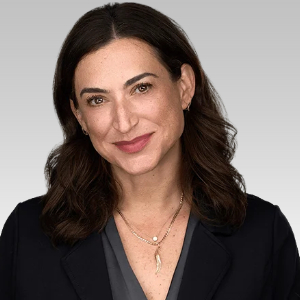
In a market built on technical expertise, rapid innovation, and constant change, the qualities that often define exceptional leaders are the ones least discussed: communication, adaptability, emotional intelligence, judgment, and the ability to influence across functions. As AI, emerging technologies, and innovation strategy reshape the role of legal and business leaders, professionals must balance technical depth with team development, stakeholder management, and organizational credibility. Drawing from her experience leading within a global technology organization, Diane Gabl Kratz will explore the human skills that help leaders grow their careers, build stronger teams, and create lasting impact in Silicon Valley and beyond.
This keynote will explore:
- The leadership traits that matter most in complex technology organizations
- Building trust, credibility, and influence across legal, technical, and business teams
- Navigating career growth and leadership transitions in emerging technology environments
- Developing resilient, engaged, and high-performing teams
Helping management and the board anticipate emerging AI risks, make informed strategic decisions, and prepare before issues become litigation, regulatory, or reputational problems. Giving legal leaders a more proactive role in AI strategy by translating risk into business terms, raising issues early, and helping executives navigate the next wave of AI-related challenges.

For years, many organizations focused primarily on defensive patent strategies, viewing portfolios as protection against litigation rather than business assets. Today, increasing investment in AI and emerging technologies is driving renewed interest in monetization, licensing, and strategic enforcement. As competition intensifies and technology investments grow, companies are reevaluating how intellectual property can be used to create leverage, generate value, and support broader business objectives.
This panel will explore:
- When offensive patent strategies make business sense
- Balancing enforcement opportunities with litigation and reputational risk
- Leveraging licensing programs to unlock portfolio value
- Aligning patent strategy with competitive and commercial goals

Data is the lifeblood of AI and the primary source of risk. As organizations leverage data to train models and automate decisions, privacy, security, and intellectual property concerns multiply. Protecting sensitive assets and maintaining trust has become a strategic imperative for every business using AI.
This session will explore:
- How organizations ensure lawful data use, provenance, and training transparency
- Methods for protecting trade secrets, IP, and proprietary datasets in AI systems
- Best practices for embedding privacy and security controls across the AI lifecycle
- Case studies of effective data governance programs that balance utility and protection



The balance of power in patent disputes is shifting. A more patent-friendly environment, changing PTAB dynamics, well-funded NPEs, and new infringement theories around AI models, training methods, and AI-enabled products are raising the stakes for companies on the defense. Success depends on knowing how each tool works, from PTAB and reexamination to venue and settlement strategy, and on being ready before a claim arrives.
This panel will explore:
- Emerging AI patent litigation trends and where disputes are likely to arise
- Navigating PTAB, reexamination, and venue in a more pro-patent landscape
- The evolving role of litigation funding and NPE activity
- Building litigation readiness and settlement leverage through a coordinated defense



AI is accelerating how companies invent, putting pressure on IP programs to keep pace. Legal teams must capture inventorship and ownership when AI is part of the R&D process, decide what to protect and when while technologies and standards are still evolving, and build portfolios that can withstand PTAB, litigation, and diligence scrutiny. This session examines how leading organizations connect invention capture, filing strategy, and portfolio management into one process built for the speed of AI-driven innovation.
This panel will explore:
- Capturing inventorship, ownership, and human contribution in AI-assisted R&D
- Deciding what to file, when to file, and how broadly to claim as technologies evolve
- Balancing speed, portfolio growth, and patent quality under compressed innovation cycles
- Building patents and portfolios designed to withstand PTAB, litigation, diligence, and future technological change
AI risk no longer stays inside the legal department. It enters through vendor agreements, gets decided in the C-suite, and plays out across IT, HR, privacy, and product teams. Legal leaders must hold it all together: negotiating contracts for evolving technology, giving executives a clear view of exposure, and aligning teams around a shared playbook.


Trade secret protection is becoming increasingly complex as organizations rely on AI models, proprietary datasets, source code, and highly mobile technical talent to maintain competitive advantage. Traditional approaches to trade secret management are being tested by remote work, collaborative development environments, and evolving technologies. Legal leaders must balance innovation and accessibility with the safeguards necessary to protect some of their most valuable assets.
This panel will explore:
- Protecting source code, models, algorithms, and proprietary datasets
- Managing risks associated with employee mobility and departing talent
- Strengthening trade secret governance, monitoring, and enforcement practices
- Lessons from recent trade secret disputes involving emerging technologies
AI systems capable of independent reasoning and decision-making are redefining accountability in real time. These agentic technologies blur the line between tool and actor, challenging existing legal and governance frameworks. As autonomy grows, oversight, explainability, and documentation are becoming essential safeguards for organizations.
This session will explore:
- The unique risks and accountability gaps posed by autonomous AI systems
- Frameworks for oversight, auditability, and human-in-the-loop assurance
- Legal and regulatory developments defining responsibility in agentic AI use
- Practical strategies to ensure traceability and control in self-directed systems


Roundtable: AI Strategy and Risk: Helping Management and the Board Prepare – hosted by Freshfields
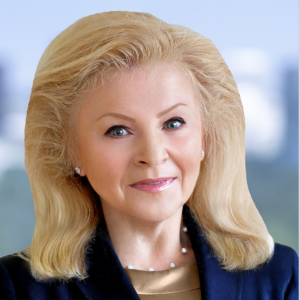
Diane Gabl Kratz is an award-winning Silicon Valley-based IP executive and registered patent attorney who leads an 18-person global team at Dolby. She specializes in IP strategy, portfolio development, managing litigation, and empowering high-performing teams. Her role includes development of U.S. and international patent portfolios; she also heads trademarks, leading to World Trademark Review honoring Dolby as 2025’s “Technology & Consumer Electronics Team of the Year.”
An 8-time IAM Strategy 300 World’s Leading IP Strategist and 2024 ACC Global Top 10 30-Somethings Award winner, Diane is a nationally-recognized speaker and regular faculty member for PLI. She has guest lectured at Stanford and UC-Berkeley’s Haas School of Business and is regularly quoted in leading legal publications including Law360, American Lawyer/Law.com, IAM, and Managing IP. Prior to Dolby, she served as Senior IP Counsel at a Fortune 500 tech company. A four-time Super Lawyers Rising Star, Diane began as an IP litigator at international law firms Morrison & Foerster and Sidley Austin. She holds a J.D. from the University of Chicago, a Physics degree from Cornell University, and IAPP privacy certifications (CIPP/E, CIPP/US).
Doru Gavril is a Partner in Freshfields’ Silicon Valley office, where he focuses on high-stakes securities disputes, corporate governance matters, internal and board investigations, shareholder litigation, SEC investigations and founder disputes. He advises leading public companies, boards and senior executives, including clients such as Alphabet, Tesla, Pinterest, Roblox and Instacart. Gavril has been recognized by Lex Machina as one of the ten most active securities defense lawyers in the United States and has been ranked by Chambers among California’s leading securities litigators.
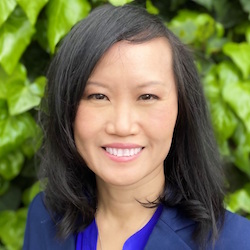
Joe Lin is General Counsel at Triple Ring Technologies and has more than 20 years of experience in patents, licensing, corporate law, and technology transactions. He previously held roles at Blakely Sokoloff Taylor & Zafman and Morrison & Foerster, served as General Counsel and Vice President of Corporate Development at Silicon Genesis, and was General Counsel of O2Micro. Joe has overseen domestic and international patent prosecution, led patent litigation teams, advised on mergers, acquisitions, and securities matters, and represented venture firms and issuers in more than 40 private financing transactions. He earned his J.D. from UCLA and a B.S. with distinction in electrical engineering and materials science from Cornell University. He is registered before the USPTO and admitted in California and before the Federal Circuit.
Richard (“Rick”) M. Bemben is a director in Sterne Kessler’s Electronics Practice Group and a Co-Chair of the firm’s PTAB Practice. He is a recognized leader in post-grant proceedings before the United States Patent and Trademark Office. Over the last decade, Rick has been counsel in over 130 PTAB proceedings—including inter partes reviews, post-grant reviews, and covered business method reviews. He has also been counsel in more than a dozen related Federal Circuit appeals. In 2023, Patexia ranked Rick as one of the most active and best performing PTAB attorneys over the five-year period from July 1, 2018 – June 30, 2023. Notably, he was ranked as the 2nd Best Performing PTAB Attorney Representing Patent Owners, and within the Top 50 Best Performing PTAB Attorneys Overall (representing Petitioners or Patent Owners) during this five-year period. Rick often speaks and publishes on patent- and PTAB-related topics. For example, he served as Co-Editor of Sterne Kessler’s “2023 PTAB Year in Review: Analysis & Trends” report, which synthesizes key events and decisions that occurred at the PTAB and provides detailed analysis to serve as a helpful reference for those who practice before or adjacent to the PTAB. He is also contributing author of Patent Office Litigation, Second Edition, which published in 2017.
Missy Brenner is Counsel in Brown Rudnick’s Intellectual Property Litigation group, where she focuses her practice on complex patent litigation and represents clients in high-stakes disputes involving cutting-edge technologies. She works with clients across technology-driven industries, including telecommunications, gaming, media, semiconductor, software, and networking systems. Missy also works with clients on trademark, trade secret, copyright, and technology-related contract disputes in state court, federal court, and alternative dispute resolution proceedings.
Missy earned her J.D., cum laude, from Santa Clara University School of Law, where she was inducted into the Order of the Coif and served as Managing Editor of the Santa Clara Law Review.
Derek Care is Senior Director, Privacy & Cybersecurity Legal at Uber, where he has helped build the company’s privacy program and advises teams on global privacy requirements, cybersecurity, data governance, vendor risk, and privacy-by-design. His work has included leading cross-company compliance initiatives, developing policies and training, and operationalizing privacy requirements across complex technology products and data practices. Before joining Uber, Derek served as Privacy Counsel at Bloomberg and practiced in the privacy group at Bingham McCutchen. He is a frequent speaker on privacy engineering and the practical implementation of privacy and security programs.
Charlie Lin is Senior Director, AI at Gen, where he works at the intersection of artificial intelligence, cybersecurity, consumer trust, and agentic systems. His current work includes initiatives focused on making AI agents safer, more private, and more accountable for consumers. Charlie previously co-founded TrustPath, an AI-powered cybersecurity company acquired by Zscaler, and has held leadership roles associated with Greylock, Cisco, VMware, and Big Switch Networks.
Cynthia Rosser is Head of Commercial & Product, Legal at Groq, where she advises at the intersection of law, technology, and business. An experienced AI, product, and technology attorney, she works closely with product, engineering, security, commercial, and executive teams to help build, commercialize, and responsibly scale innovative technology products.
Her experience spans software, SaaS, cloud infrastructure, cybersecurity, and other technology businesses, with a focus on AI governance, data strategy, privacy, cybersecurity, intellectual property, technology transactions, and evolving global regulation. Throughout her career, Cynthia has developed practical legal frameworks that enable product innovation, support responsible AI adoption, strengthen customer trust, and advance business growth.
Previously, she held senior legal roles at DigitalOcean, DocuSign, Symantec, and NetApp. Cynthia earned her J.D. from George Mason University School of Law and her undergraduate degree from Georgia Tech.
Lestin L. Kenton, Jr. is a director at Sterne, Kessler, Goldstein & Fox, where he advises companies on patent strategy, Patent Trial and Appeal Board proceedings, intellectual property portfolio development, and the protection and commercialization of artificial intelligence innovations. He has led more than 100 PTAB proceedings—including inter partes review, post-grant review, and covered business method matters—representing both patent owners and petitioners across the electronics, mechanical, and life sciences sectors.
As one of Sterne Kessler’s AI leaders, Lestin counsels organizations on protecting AI models, training data, and AI-generated innovations; navigating licensing and ownership issues; and aligning intellectual property strategy with emerging regulatory requirements. His technical experience spans machine learning, autonomous systems, robotics, medical technology, telecommunications, cloud computing, cybersecurity, computer vision, and related technologies. Before entering law, he worked as a software developer specializing in ground-based air-surveillance radar.
Lestin earned his J.D. from Widener University School of Law and his B.S.E. in Computer Science from the University of Pennsylvania. He is admitted in the District of Columbia, New Jersey, and Pennsylvania, and before the United States Patent and Trademark Office. He has been recognized by World Intellectual Property Review as a WIPR Leader and by Patexia as one of the country’s most active and best-performing PTAB attorneys.
Sheldon Lee is Associate General Counsel at Meta and a registered patent attorney with extensive experience across technology, software, and medical-device businesses. Previously, she held senior legal roles at Symantec and Intuit. Sheldon earned her J.D. from UCLA School of Law and is an active member of the California Bar. She is also a named inventor on several medical-device patents involving lung-treatment technologies.
Peter Jovanovic is a Legal Director, IP at Dell Technologies, providing support for several business units. At Dell, he is responsible for patent portfolio development, patent litigation, open source management, and license drafting and negotiation. Before joining Dell, he was an associate patent attorney providing prosecution, litigation, and licensing services. Prior to becoming an attorney, Peter was a software engineer, having experience in computer security, satellite communications, and logistic planning software.
Peter has bachelor’s degrees in computer science and mathematics from UC San Diego, a master’s degree in computer science from San Diego State, and a juris doctorate from UC Hastings College of the Law. He is registered to practice before the USPTO and is a member of the California Bar.
Peter has taught as an adjunct law professor, instructing on the primary legal and procedural requirements for preparing and prosecuting patent applications under US federal law.
Jason Kang is Assistant Director of Patents at Intel, where he leads global patent strategy and portfolio management for the company’s graphics processing and accelerated computing technologies, including GPUs, AI accelerators and high-performance computing systems.
Jason is a recognized IP strategist with nearly two decades of in-house experience and deep expertise across the full patent lifecycle — from invention harvesting, drafting and prosecution to appeals, inter partes review and other post-grant proceedings before the USPTO. He has been at the forefront of adopting AI‑powered tools in IP practice, leveraging them to enhance portfolio analytics, uncover competitive whitespace and drive data-driven decision-making across high-value licensing and litigation strategies.
Prior to his legal career, Jason was a semiconductor engineer at Infineon Technologies in Munich and Singapore, and at STMicroelectronics in Singapore, where he led test development for complex mixed-signal devices and managed chip lifecycle programs from design through production. He is a named inventor on US Patent 7,408,362, and this hands-on engineering background provides a distinctive technical foundation for his work in developing IP strategies for advanced computing architectures.
Jason plays a central role in shaping offensive and defensive IP strategies spanning GPU architectures, AI training and inference hardware, and performance optimization innovations. He has built and managed a large, globally distributed patent portfolio aligned with multi-generational product roadmaps and contributed to complex multi-jurisdictional licensing, assertion and portfolio optimization initiatives that maximize Intel’s intellectual property value.
A frequent speaker and thought contributor, Jason has presented at leading industry forums, including IPBC Global and the LES Silicon Valley Chapter 22nd Annual Conference, sharing perspectives on AI adoption in IP operations and patent strategy in semiconductors and the digital economy. He is also an LCLD Fellow, reflecting his commitment to leadership development.
He holds a BEng (Hons), MSc and LLB (Hons), and is admitted in California and Singapore, with CIPP/A and CIPP/E certifications.
Christopher Bonny is a Partner at Gish LLP, where he advises technology companies on complex patent and trade secret matters across industries including semiconductors, telecommunications, network security and encryption, software, medical devices, digital media and consumer products.
Chris has more than 15 years of experience litigating high-stakes intellectual property disputes for both patent owners and accused infringers. His practice spans all stages of litigation, from pre-suit investigation through appeal, with extensive experience before federal district courts, the Patent Trial and Appeal Board and the U.S. Court of Appeals for the Federal Circuit. He also counsels clients on post-grant proceedings, dispute resolution, business-focused patent strategy and IP-related transactions.
Chris brings a strong technical background to his practice. He earned a B.S. in Mechanical Engineering, summa cum laude, from California Polytechnic State University, with a concentration in mechatronics, and worked in microfabrication and medical-device research and development before entering the legal profession. He earned his J.D. from Harvard Law School, where he received the Dean’s Scholar Award in Patent Law. Prior to joining Gish PLLC, Chris practiced for 15 years in the IP Litigation group at Ropes & Gray LLP.
Qian Huang advises major players in technology sectors on intellectual property matters. An experienced attorney with a solid technical background, Qian handles patent matters for clients ranging from Fortune 500 to startup companies, advising on patenting strategy and procurement, legal opinions, freedom to operate, IP due diligence in business transactions, and litigation. With a Ph.D. specializing in AI, Qian has handled a large volume of AI related patent matters over the years, especially in the recent wave of AI, on inventions relating to machine learning models, generative AI, distributed learning, selective training for specialization, big data analytics, and AI-enabled applications, such as personalized services, data mining, unman vehicle, drug discovery, presurgical planning and AI-guided robotic in-surgery navigation, etc. Before becoming an attorney, Qian was a postdoctoral fellow at IBM Research, a research scientist at Siemens Corporate Research and Bell Labs at AT&T with a research focus on machine learning models and applications thereof. Qian calls upon this experience to provide valued legal services to high tech clients.
Jason is a leader in Vorys intellectual property (IP) group with a national practice. He co-chairs the firm’s trademark and copyright teams, and is a lead trial lawyer for clients involved in patent, copyright, branding and corporate confidential information cases, including trade secret and technology matters.
For two decades, Jason has counseled clients on a wide array of IP matters including federal court litigation, appellate litigation, and international protection and enforcement. He routinely provides guidance and counseling on all aspects of trademark and copyright prosecution and the IP aspects of commercial transactions. Jason has also represented clients in proceedings before the U.S. Patent and Trademark Office as a registered patent attorney.
Elise Edlin is a Partner at Gish LLP and an experienced patent trial litigator who represents technology companies in high-stakes intellectual property disputes in federal courts and before the International Trade Commission. Her practice spans complex technologies including semiconductors, networking, voice and video conferencing, artificial intelligence and machine learning, wireless technologies, pharmaceuticals and life sciences.
Elise has particular experience developing and challenging patent damages theories, including reasonable royalty and standard-essential patent analyses, apportionment, license comparability and marking issues. She has handled matters through every stage of litigation, from discovery and claim construction through dispositive motions, expert proceedings, jury trials and appeals. Her recent experience includes leading the damages case in a 2024 Western District of Texas jury trial and successfully challenging damages theories through Daubert and other pretrial motions.
Before joining Gish, Elise was a partner at Perkins Coie. She earned her J.D. from the University of California, Berkeley School of Law, where she served on the Berkeley Technology Law Journal, and her B.S. in Molecular, Cellular and Developmental Biology from the University of California, Santa Barbara. She is admitted to practice in California and before the U.S. Court of Appeals for the Federal Circuit and multiple federal district courts.
Martin Arastafar is Assistant General Counsel, IP at Veeva Systems, where he supports the protection and strategic development of intellectual property for life sciences technology. Before joining Veeva, he spent 11 years at RingCentral in senior intellectual property and technology-law roles. His practice spans patent portfolio strategy, AI governance, open-source software, licensing, and product counseling. Martin is admitted to practice in California, New York, Massachusetts, and Ontario and is registered to practice before the U.S. Patent and Trademark Office. He also volunteers with the California Inventors Assistance Program, helping independent inventors and startups navigate patent matters.
Osama Hussain is the Chief Legal Officer at Menlo Security, bringing over 20 years of strategic legal leadership to the technology sector. He directs global legal operations and M&A initiatives to drive enterprise growth. Previously, Osama guided international and complex transactions as General Counsel at Irdeto, and advised on deal structuring for venture capital investments at Acuity Ventures. A U.S. Patent Attorney recognized in the IAM Strategy 300 and Legal500 GC Powerlist, he specializes in developing high-value IP strategies that optimize business outcomes.
Ajay A. Jagtiani possesses 27 years of experience in all phases of patent prosecution, including patentability, validity and infringement opinions, procurement of international patents, client counseling, licensing, agreement negotiations, and mergers/acquisitions.
Ajay supports numerous clients in biotechnology, including diagnostics, genomics, immunotherapy, proteomics, pharmaceuticals and other microbiology techniques. He has extensive experience in the academic world, providing assistance in intellectual property matters and technology transfer to educational institutions around the globe.
In the state arena, he has advised the Secretary of Technology for the Commonwealth of Virginia regarding intellectual property matters, and he has drafted proposed intellectual property legislation.
At the federal level, Ajay has advised such government agencies and laboratories as the Department of Energy, the National Institute of Standards and Technology, Department of Mines, Naval Medical Research and Development Command, Naval Command and Control Center, NASA, Lawrence Livermore Laboratory, Sandia National Laboratory, and the Naval Research Laboratory.
Malgorzata “Gosia” Kulczycka is an experienced attorney in the firm’s San Jose office with a broad-based IP law practice. With more than 15 years of legal experience, Gosia works to protect and support her client’s intellectual property through patent preparation and prosecution and by employing trademark and brand protection strategies for and against infringement claims.
Inventor herself, Gosia practices in various IP areas and technologies, including artificial intelligence and machine learning, communication technologies, complex software, and more.
Gosia also has extensive experience in computer graphics and computer networks. She has procured and managed large IP client accounts in computer graphics and AI.
Aaron Ta is Senior Privacy and AI Governance Manager at Datadog, where he works on the operational integration of privacy, responsible AI, and enterprise governance. He was a coauthor of Datadog’s announcement that the company achieved ISO/IEC 42001 certification for its AI management system, covering AI-powered products and services including agentic, observability, and security capabilities. His work reflects a practical focus on translating responsible-AI principles and international standards into documented management systems, controls, and assurance for customers and internal stakeholders.
Belinda Luu is a Senior Counsel at Kaiser Permanente. Ms. Luu has been a strategic Leader of AI and data management and governance with over 20 years of experience in AI, data, digital transformation, complex technology transactions, and intellectual property. Belinda leads the AI Regulatory & Analysis Team at Kaiser Permanente, and sits on the State of California Data Exchange Framework Policy and Procedures Committee. She received two American Bar Association Outstanding Leadership Awards for leading the American Bar Association’s Copyrights, AI, & Emerging Technology Committee and she was nominated for the “Women To Watch” Award From Business Insurance by Kaiser Permanente’s Chief Data Officer. Belinda is a Board Member of Asian Health Services, a community healthcare service provider, and was Co-Chair of the Women’s Committee on the Asian American Bar Association. Belinda is a frequent speaker on the topics of AI, Big Data, digital transformation, and health care innovation.
Lara Sevener is a Partner in the Corporate Practice Group at Jones Walker LLP, where she is a member of the commercial transactions team and co-leads the firm’s Technology Industry Team.
With more than 20 years of experience in private practice and in-house legal roles, Lara advises companies on complex technology and commercial transactions, including strategic sourcing, outsourcing, SaaS and software licensing, digital transformation, data privacy, and the acquisition and commercialization of intellectual property. She has represented domestic and international businesses in multimillion-dollar transactions across a range of industries.
Prior to joining Jones Walker, Lara served as global lead procurement, technology, and outsourcing counsel for a leading global audit and consulting organization. Her in-house experience also includes legal roles supporting e-commerce, technology, and procurement for major Fortune 50 and energy companies.
Lara earned her J.D., cum laude, from the University of Georgia School of Law and her B.A., summa cum laude, from the University of Georgia.
Irvin Tyan serves as acting General Counsel to THREAD through Incugal, the virtual outside general counsel firm he founded to support technology companies from seed through acquisition. Prior to THREAD, he was the acting General Counsel at AutoRABIT. Irvin has been recognized nationally as an innovative legal leader, and has been a speaker, moderator or judge at numerous legal conferences, events and law schools. He also sits on the board of advisors of multiple technology start-ups. Creative Artists Agency represents Irvin’s legal memoir.
Phil Strauss is a technology legal executive specializing in product counseling, data protection, cybersecurity, AI governance and regulatory compliance for software, cybersecurity, gaming, digital health and e-commerce companies.
He currently serves as Director of Privacy & AI Governance at cybersecurity company Fortinet, where he advises product, engineering, security and executive leadership teams on AI governance, cybersecurity incident response, privacy, product counseling and regulatory risk management.
Previously, Phil held senior legal, privacy and compliance leadership roles at Sony PlayStation, StockX, Rakuten and other Silicon Valley technology companies. Earlier in his career, Phil served as general counsel of two public business intelligence enterprise software companies, product counsel at Adobe, Director in the forensic advisory practice at KPMG, and an associate at Shearman & Sterling and Jones Day.
He holds a B.A. from Emory University, a J.D. from Duke University School of Law and an M.B.A. from the Haas School of Business at UC Berkeley, where he has also served as adjunct faculty teaching business law. He is admitted to practice in California and holds multiple privacy and AI governance certifications, including AIGP, CIPP/US, CIPP/E, CIPM, FIP and PLS. Phil is a regular speaker and moderator on privacy, AI governance, cybersecurity and technology law topics.
Phil lives in San Francisco with his family and dogs and, outside work, can usually be found playing guitar in classic rock cover bands, reading thriller novels or pretending he still enjoys tennis, weightlifting, and his Peloton.
Shrut Kirti currently serves as Director, Intellectual Property, at Applied Materials, a world-leading semiconductor and display equipment company. In his role, Shrut provides IP risk counseling, advises on pre-litigation IP disputes, and leads internal IP investigations. Prior to Applied Materials, Shrut served as the interim Head of Patents at Twitter (now X). He started his career at the international law firm Ropes & Gray, where his practice primarily focused on IP litigation and patent prosecution.
Troy E. Grabow is Director, IP at Bloom Energy, where he helps guide intellectual property strategy and protect innovation across the company. He brings extensive experience spanning in-house legal leadership, private practice, government service and the federal judiciary.
Before joining Bloom Energy, Troy founded Grabow Law, advising emerging and established companies as fractional general and intellectual property counsel. He previously served as Associate General Counsel, IP & Product at PAX Labs and as General Counsel and Vice President of Intellectual Property at Cabeau. Earlier in his career, he was a partner at Finnegan, where his practice focused on patent litigation, prosecution and strategic counseling. He began his career as a patent examiner with the U.S. Patent and Trademark Office and later served as a law clerk at the U.S. Court of Appeals for the Federal Circuit.
Troy earned his J.D. with high honors from The George Washington University Law School and holds a degree in mechanical engineering from Union College. He has served on the Board of Directors of the American Intellectual Property Law Association and received AIPLA’s Mentor of the Year Award.
Matt Acosta is a complex commercial and Intellectual Property litigator and adviser experienced in a variety of matters, including those involving patent, trademark, and copyright litigation, breaches of contract, trade secret and unfair competition, breach of warranty, banking, and insurance. His litigation practice includes counseling clients at every stage of the trial process, including developing cost-effective litigation strategies, reducing the burdens of discovery, negotiating favorable settlements, and representing clients at trial. Matt has litigated cases throughout the country, including in Illinois, Washington, Florida, Utah, Delaware, Georgia, California, and Texas. Matt has also practiced before the United States Court of Appeals for the Fifth and Federal Circuits.
In addition to his trial practice, Matt assists clients in developing intellectual property strategies and protection. This includes navigating the costs and benefits of trademark, trade secret and patent protection, trademark prosecution before the USPTO, performing infringement and liability analyses, and providing general IP counseling. Matt has represented and advised a variety of clients, including Fortune 500 companies, in the consumer electronics, biomedical, internet and technology services, mobile application, and telecommunication technology spaces.
Following law school, Matt clerked for the Honorable Leonard Davis, Eastern District of Texas. While in law school, Matt interned for the Hon. Walter Smith Jr., Western District of Texas, Waco Division, as well as the Hon. Robert Pemberton, Texas Third Court of Appeals – Austin.
Lily Toy is Chief Legal Officer at Stack Overflow, where she leads the company’s legal, corporate governance, and compliance functions and partners with the senior leadership team on strategic growth. She brings nearly two decades of corporate and technology-law experience. Before joining Stack Overflow, Lily served as General Counsel at Dialpad, helping support the growth of its SaaS business, and as General Counsel and Corporate Secretary at Telenav. Earlier in her career, she practiced corporate law at K&L Gates, Fenwick & West, and Shearman & Sterling. Lily earned bachelor’s degrees in economics and legal studies from the University of California, Berkeley and her J.D. from Cornell Law School.
Anisha is a technology attorney in the San Francisco Bay Area with experience in privacy, product, and commercial transactions. She is currently an Assistant General Counsel at Intuit — the global financial technology platform that makes TurboTax, Credit Karma, QuickBooks, and Mailchimp – where she supports innovation from a product, privacy, and AI lens. Previously, Anisha worked at organizations like Zendesk, Tipalti, the Wikimedia Foundation, and the Minnesota Judicial Branch. She has also served as a board member of the South Asian Bar Association of Northern California, and a fellow and mentor with the Internet Law and Policy Foundry.
Raghad Alnouri is a Generative AI specialist at Google Cloud, where she works with customers to build and deploy real-world AI solutions. With a background in mathematics, data science and machine learning, she focuses on translating emerging AI capabilities into practical applications that drive innovation and business value.
Her work at Google Cloud has included generative AI initiatives supporting organizations across industries, as well as demonstrating Gemini-powered applications at Google I/O and other major Google events. She has contributed to projects spanning travel, tourism and AI-enabled sports experiences, including work showcasing Gemini as an AI sports judge at the X Games.
Raghad holds a master’s degree in mathematics from Université du Québec à Montréal (UQAM), where her graduate research focused on generalized complex structures. She later pursued advanced studies in data science and machine learning through McGill University School of Continuing Studies, with coursework in natural language processing, predictive modeling, recommender systems, neural networks and deep learning. She has also earned professional certifications across Google Cloud, Microsoft Azure and Databricks and has served as a mentor with Women of MENA in Technology.
Speakers
Diane Gabl Kratz is an award-winning Silicon Valley-based IP executive and registered patent attorney who leads an 18-person global team at Dolby. She specializes in IP strategy, portfolio development, managing litigation, and empowering high-performing teams. Her role includes development of U.S. and international patent portfolios; she also heads trademarks, leading to World Trademark Review honoring Dolby as 2025’s “Technology & Consumer Electronics Team of the Year.”
An 8-time IAM Strategy 300 World’s Leading IP Strategist and 2024 ACC Global Top 10 30-Somethings Award winner, Diane is a nationally-recognized speaker and regular faculty member for PLI. She has guest lectured at Stanford and UC-Berkeley’s Haas School of Business and is regularly quoted in leading legal publications including Law360, American Lawyer/Law.com, IAM, and Managing IP. Prior to Dolby, she served as Senior IP Counsel at a Fortune 500 tech company. A four-time Super Lawyers Rising Star, Diane began as an IP litigator at international law firms Morrison & Foerster and Sidley Austin. She holds a J.D. from the University of Chicago, a Physics degree from Cornell University, and IAPP privacy certifications (CIPP/E, CIPP/US).
Joe Lin is General Counsel at Triple Ring Technologies and has more than 20 years of experience in patents, licensing, corporate law, and technology transactions. He previously held roles at Blakely Sokoloff Taylor & Zafman and Morrison & Foerster, served as General Counsel and Vice President of Corporate Development at Silicon Genesis, and was General Counsel of O2Micro. Joe has overseen domestic and international patent prosecution, led patent litigation teams, advised on mergers, acquisitions, and securities matters, and represented venture firms and issuers in more than 40 private financing transactions. He earned his J.D. from UCLA and a B.S. with distinction in electrical engineering and materials science from Cornell University. He is registered before the USPTO and admitted in California and before the Federal Circuit.
Irvin Tyan serves as acting General Counsel to THREAD through Incugal, the virtual outside general counsel firm he founded to support technology companies from seed through acquisition. Prior to THREAD, he was the acting General Counsel at AutoRABIT. Irvin has been recognized nationally as an innovative legal leader, and has been a speaker, moderator or judge at numerous legal conferences, events and law schools. He also sits on the board of advisors of multiple technology start-ups. Creative Artists Agency represents Irvin’s legal memoir.
Shrut Kirti currently serves as Director, Intellectual Property, at Applied Materials, a world-leading semiconductor and display equipment company. In his role, Shrut provides IP risk counseling, advises on pre-litigation IP disputes, and leads internal IP investigations. Prior to Applied Materials, Shrut served as the interim Head of Patents at Twitter (now X). He started his career at the international law firm Ropes & Gray, where his practice primarily focused on IP litigation and patent prosecution.
Peter Jovanovic is a Legal Director, IP at Dell Technologies, providing support for several business units. At Dell, he is responsible for patent portfolio development, patent litigation, open source management, and license drafting and negotiation. Before joining Dell, he was an associate patent attorney providing prosecution, litigation, and licensing services. Prior to becoming an attorney, Peter was a software engineer, having experience in computer security, satellite communications, and logistic planning software.
Peter has bachelor’s degrees in computer science and mathematics from UC San Diego, a master’s degree in computer science from San Diego State, and a juris doctorate from UC Hastings College of the Law. He is registered to practice before the USPTO and is a member of the California Bar.
Peter has taught as an adjunct law professor, instructing on the primary legal and procedural requirements for preparing and prosecuting patent applications under US federal law.
Jason Kang is Assistant Director of Patents at Intel, where he leads global patent strategy and portfolio management for the company’s graphics processing and accelerated computing technologies, including GPUs, AI accelerators and high-performance computing systems.
Jason is a recognized IP strategist with nearly two decades of in-house experience and deep expertise across the full patent lifecycle — from invention harvesting, drafting and prosecution to appeals, inter partes review and other post-grant proceedings before the USPTO. He has been at the forefront of adopting AI‑powered tools in IP practice, leveraging them to enhance portfolio analytics, uncover competitive whitespace and drive data-driven decision-making across high-value licensing and litigation strategies.
Prior to his legal career, Jason was a semiconductor engineer at Infineon Technologies in Munich and Singapore, and at STMicroelectronics in Singapore, where he led test development for complex mixed-signal devices and managed chip lifecycle programs from design through production. He is a named inventor on US Patent 7,408,362, and this hands-on engineering background provides a distinctive technical foundation for his work in developing IP strategies for advanced computing architectures.
Jason plays a central role in shaping offensive and defensive IP strategies spanning GPU architectures, AI training and inference hardware, and performance optimization innovations. He has built and managed a large, globally distributed patent portfolio aligned with multi-generational product roadmaps and contributed to complex multi-jurisdictional licensing, assertion and portfolio optimization initiatives that maximize Intel’s intellectual property value.
A frequent speaker and thought contributor, Jason has presented at leading industry forums, including IPBC Global and the LES Silicon Valley Chapter 22nd Annual Conference, sharing perspectives on AI adoption in IP operations and patent strategy in semiconductors and the digital economy. He is also an LCLD Fellow, reflecting his commitment to leadership development.
He holds a BEng (Hons), MSc and LLB (Hons), and is admitted in California and Singapore, with CIPP/A and CIPP/E certifications.
Martin Arastafar is Assistant General Counsel, IP at Veeva Systems, where he supports the protection and strategic development of intellectual property for life sciences technology. Before joining Veeva, he spent 11 years at RingCentral in senior intellectual property and technology-law roles. His practice spans patent portfolio strategy, AI governance, open-source software, licensing, and product counseling. Martin is admitted to practice in California, New York, Massachusetts, and Ontario and is registered to practice before the U.S. Patent and Trademark Office. He also volunteers with the California Inventors Assistance Program, helping independent inventors and startups navigate patent matters.
Osama Hussain is the Chief Legal Officer at Menlo Security, bringing over 20 years of strategic legal leadership to the technology sector. He directs global legal operations and M&A initiatives to drive enterprise growth. Previously, Osama guided international and complex transactions as General Counsel at Irdeto, and advised on deal structuring for venture capital investments at Acuity Ventures. A U.S. Patent Attorney recognized in the IAM Strategy 300 and Legal500 GC Powerlist, he specializes in developing high-value IP strategies that optimize business outcomes.
Derek Care is Senior Director, Privacy & Cybersecurity Legal at Uber, where he has helped build the company’s privacy program and advises teams on global privacy requirements, cybersecurity, data governance, vendor risk, and privacy-by-design. His work has included leading cross-company compliance initiatives, developing policies and training, and operationalizing privacy requirements across complex technology products and data practices. Before joining Uber, Derek served as Privacy Counsel at Bloomberg and practiced in the privacy group at Bingham McCutchen. He is a frequent speaker on privacy engineering and the practical implementation of privacy and security programs.
Charlie Lin is Senior Director, AI at Gen, where he works at the intersection of artificial intelligence, cybersecurity, consumer trust, and agentic systems. His current work includes initiatives focused on making AI agents safer, more private, and more accountable for consumers. Charlie previously co-founded TrustPath, an AI-powered cybersecurity company acquired by Zscaler, and has held leadership roles associated with Greylock, Cisco, VMware, and Big Switch Networks.
Cynthia Rosser is Head of Commercial & Product, Legal at Groq, where she advises at the intersection of law, technology, and business. An experienced AI, product, and technology attorney, she works closely with product, engineering, security, commercial, and executive teams to help build, commercialize, and responsibly scale innovative technology products.
Her experience spans software, SaaS, cloud infrastructure, cybersecurity, and other technology businesses, with a focus on AI governance, data strategy, privacy, cybersecurity, intellectual property, technology transactions, and evolving global regulation. Throughout her career, Cynthia has developed practical legal frameworks that enable product innovation, support responsible AI adoption, strengthen customer trust, and advance business growth.
Previously, she held senior legal roles at DigitalOcean, DocuSign, Symantec, and NetApp. Cynthia earned her J.D. from George Mason University School of Law and her undergraduate degree from Georgia Tech.
Aaron Ta is Senior Privacy and AI Governance Manager at Datadog, where he works on the operational integration of privacy, responsible AI, and enterprise governance. He was a coauthor of Datadog’s announcement that the company achieved ISO/IEC 42001 certification for its AI management system, covering AI-powered products and services including agentic, observability, and security capabilities. His work reflects a practical focus on translating responsible-AI principles and international standards into documented management systems, controls, and assurance for customers and internal stakeholders.
Phil Strauss is a technology legal executive specializing in product counseling, data protection, cybersecurity, AI governance and regulatory compliance for software, cybersecurity, gaming, digital health and e-commerce companies.
He currently serves as Director of Privacy & AI Governance at cybersecurity company Fortinet, where he advises product, engineering, security and executive leadership teams on AI governance, cybersecurity incident response, privacy, product counseling and regulatory risk management.
Previously, Phil held senior legal, privacy and compliance leadership roles at Sony PlayStation, StockX, Rakuten and other Silicon Valley technology companies. Earlier in his career, Phil served as general counsel of two public business intelligence enterprise software companies, product counsel at Adobe, Director in the forensic advisory practice at KPMG, and an associate at Shearman & Sterling and Jones Day.
He holds a B.A. from Emory University, a J.D. from Duke University School of Law and an M.B.A. from the Haas School of Business at UC Berkeley, where he has also served as adjunct faculty teaching business law. He is admitted to practice in California and holds multiple privacy and AI governance certifications, including AIGP, CIPP/US, CIPP/E, CIPM, FIP and PLS. Phil is a regular speaker and moderator on privacy, AI governance, cybersecurity and technology law topics.
Phil lives in San Francisco with his family and dogs and, outside work, can usually be found playing guitar in classic rock cover bands, reading thriller novels or pretending he still enjoys tennis, weightlifting, and his Peloton.
Lily Toy is Chief Legal Officer at Stack Overflow, where she leads the company’s legal, corporate governance, and compliance functions and partners with the senior leadership team on strategic growth. She brings nearly two decades of corporate and technology-law experience. Before joining Stack Overflow, Lily served as General Counsel at Dialpad, helping support the growth of its SaaS business, and as General Counsel and Corporate Secretary at Telenav. Earlier in her career, she practiced corporate law at K&L Gates, Fenwick & West, and Shearman & Sterling. Lily earned bachelor’s degrees in economics and legal studies from the University of California, Berkeley and her J.D. from Cornell Law School.
Anisha is a technology attorney in the San Francisco Bay Area with experience in privacy, product, and commercial transactions. She is currently an Assistant General Counsel at Intuit — the global financial technology platform that makes TurboTax, Credit Karma, QuickBooks, and Mailchimp – where she supports innovation from a product, privacy, and AI lens. Previously, Anisha worked at organizations like Zendesk, Tipalti, the Wikimedia Foundation, and the Minnesota Judicial Branch. She has also served as a board member of the South Asian Bar Association of Northern California, and a fellow and mentor with the Internet Law and Policy Foundry.
Belinda Luu is a Senior Counsel at Kaiser Permanente. Ms. Luu has been a strategic Leader of AI and data management and governance with over 20 years of experience in AI, data, digital transformation, complex technology transactions, and intellectual property. Belinda leads the AI Regulatory & Analysis Team at Kaiser Permanente, and sits on the State of California Data Exchange Framework Policy and Procedures Committee. She received two American Bar Association Outstanding Leadership Awards for leading the American Bar Association’s Copyrights, AI, & Emerging Technology Committee and she was nominated for the “Women To Watch” Award From Business Insurance by Kaiser Permanente’s Chief Data Officer. Belinda is a Board Member of Asian Health Services, a community healthcare service provider, and was Co-Chair of the Women’s Committee on the Asian American Bar Association. Belinda is a frequent speaker on the topics of AI, Big Data, digital transformation, and health care innovation.
Sheldon Lee is Associate General Counsel at Meta and a registered patent attorney with extensive experience across technology, software, and medical-device businesses. Previously, she held senior legal roles at Symantec and Intuit. Sheldon earned her J.D. from UCLA School of Law and is an active member of the California Bar. She is also a named inventor on several medical-device patents involving lung-treatment technologies.
Lestin L. Kenton, Jr. is a director at Sterne, Kessler, Goldstein & Fox, where he advises companies on patent strategy, Patent Trial and Appeal Board proceedings, intellectual property portfolio development, and the protection and commercialization of artificial intelligence innovations. He has led more than 100 PTAB proceedings—including inter partes review, post-grant review, and covered business method matters—representing both patent owners and petitioners across the electronics, mechanical, and life sciences sectors.
As one of Sterne Kessler’s AI leaders, Lestin counsels organizations on protecting AI models, training data, and AI-generated innovations; navigating licensing and ownership issues; and aligning intellectual property strategy with emerging regulatory requirements. His technical experience spans machine learning, autonomous systems, robotics, medical technology, telecommunications, cloud computing, cybersecurity, computer vision, and related technologies. Before entering law, he worked as a software developer specializing in ground-based air-surveillance radar.
Lestin earned his J.D. from Widener University School of Law and his B.S.E. in Computer Science from the University of Pennsylvania. He is admitted in the District of Columbia, New Jersey, and Pennsylvania, and before the United States Patent and Trademark Office. He has been recognized by World Intellectual Property Review as a WIPR Leader and by Patexia as one of the country’s most active and best-performing PTAB attorneys.
Troy E. Grabow is Director, IP at Bloom Energy, where he helps guide intellectual property strategy and protect innovation across the company. He brings extensive experience spanning in-house legal leadership, private practice, government service and the federal judiciary.
Before joining Bloom Energy, Troy founded Grabow Law, advising emerging and established companies as fractional general and intellectual property counsel. He previously served as Associate General Counsel, IP & Product at PAX Labs and as General Counsel and Vice President of Intellectual Property at Cabeau. Earlier in his career, he was a partner at Finnegan, where his practice focused on patent litigation, prosecution and strategic counseling. He began his career as a patent examiner with the U.S. Patent and Trademark Office and later served as a law clerk at the U.S. Court of Appeals for the Federal Circuit.
Troy earned his J.D. with high honors from The George Washington University Law School and holds a degree in mechanical engineering from Union College. He has served on the Board of Directors of the American Intellectual Property Law Association and received AIPLA’s Mentor of the Year Award.
Richard (“Rick”) M. Bemben is a director in Sterne Kessler’s Electronics Practice Group and a Co-Chair of the firm’s PTAB Practice. He is a recognized leader in post-grant proceedings before the United States Patent and Trademark Office. Over the last decade, Rick has been counsel in over 130 PTAB proceedings—including inter partes reviews, post-grant reviews, and covered business method reviews. He has also been counsel in more than a dozen related Federal Circuit appeals. In 2023, Patexia ranked Rick as one of the most active and best performing PTAB attorneys over the five-year period from July 1, 2018 – June 30, 2023. Notably, he was ranked as the 2nd Best Performing PTAB Attorney Representing Patent Owners, and within the Top 50 Best Performing PTAB Attorneys Overall (representing Petitioners or Patent Owners) during this five-year period. Rick often speaks and publishes on patent- and PTAB-related topics. For example, he served as Co-Editor of Sterne Kessler’s “2023 PTAB Year in Review: Analysis & Trends” report, which synthesizes key events and decisions that occurred at the PTAB and provides detailed analysis to serve as a helpful reference for those who practice before or adjacent to the PTAB. He is also contributing author of Patent Office Litigation, Second Edition, which published in 2017.
Raghad Alnouri is a Generative AI specialist at Google Cloud, where she works with customers to build and deploy real-world AI solutions. With a background in mathematics, data science and machine learning, she focuses on translating emerging AI capabilities into practical applications that drive innovation and business value.
Her work at Google Cloud has included generative AI initiatives supporting organizations across industries, as well as demonstrating Gemini-powered applications at Google I/O and other major Google events. She has contributed to projects spanning travel, tourism and AI-enabled sports experiences, including work showcasing Gemini as an AI sports judge at the X Games.
Raghad holds a master’s degree in mathematics from Université du Québec à Montréal (UQAM), where her graduate research focused on generalized complex structures. She later pursued advanced studies in data science and machine learning through McGill University School of Continuing Studies, with coursework in natural language processing, predictive modeling, recommender systems, neural networks and deep learning. She has also earned professional certifications across Google Cloud, Microsoft Azure and Databricks and has served as a mentor with Women of MENA in Technology.
Elise Edlin is a Partner at Gish LLP and an experienced patent trial litigator who represents technology companies in high-stakes intellectual property disputes in federal courts and before the International Trade Commission. Her practice spans complex technologies including semiconductors, networking, voice and video conferencing, artificial intelligence and machine learning, wireless technologies, pharmaceuticals and life sciences.
Elise has particular experience developing and challenging patent damages theories, including reasonable royalty and standard-essential patent analyses, apportionment, license comparability and marking issues. She has handled matters through every stage of litigation, from discovery and claim construction through dispositive motions, expert proceedings, jury trials and appeals. Her recent experience includes leading the damages case in a 2024 Western District of Texas jury trial and successfully challenging damages theories through Daubert and other pretrial motions.
Before joining Gish, Elise was a partner at Perkins Coie. She earned her J.D. from the University of California, Berkeley School of Law, where she served on the Berkeley Technology Law Journal, and her B.S. in Molecular, Cellular and Developmental Biology from the University of California, Santa Barbara. She is admitted to practice in California and before the U.S. Court of Appeals for the Federal Circuit and multiple federal district courts.
Christopher Bonny is a Partner at Gish LLP, where he advises technology companies on complex patent and trade secret matters across industries including semiconductors, telecommunications, network security and encryption, software, medical devices, digital media and consumer products.
Chris has more than 15 years of experience litigating high-stakes intellectual property disputes for both patent owners and accused infringers. His practice spans all stages of litigation, from pre-suit investigation through appeal, with extensive experience before federal district courts, the Patent Trial and Appeal Board and the U.S. Court of Appeals for the Federal Circuit. He also counsels clients on post-grant proceedings, dispute resolution, business-focused patent strategy and IP-related transactions.
Chris brings a strong technical background to his practice. He earned a B.S. in Mechanical Engineering, summa cum laude, from California Polytechnic State University, with a concentration in mechatronics, and worked in microfabrication and medical-device research and development before entering the legal profession. He earned his J.D. from Harvard Law School, where he received the Dean’s Scholar Award in Patent Law. Prior to joining Gish PLLC, Chris practiced for 15 years in the IP Litigation group at Ropes & Gray LLP.
Jason is a leader in Vorys intellectual property (IP) group with a national practice. He co-chairs the firm’s trademark and copyright teams, and is a lead trial lawyer for clients involved in patent, copyright, branding and corporate confidential information cases, including trade secret and technology matters.
For two decades, Jason has counseled clients on a wide array of IP matters including federal court litigation, appellate litigation, and international protection and enforcement. He routinely provides guidance and counseling on all aspects of trademark and copyright prosecution and the IP aspects of commercial transactions. Jason has also represented clients in proceedings before the U.S. Patent and Trademark Office as a registered patent attorney.
Lara Sevener is a Partner in the Corporate Practice Group at Jones Walker LLP, where she is a member of the commercial transactions team and co-leads the firm’s Technology Industry Team.
With more than 20 years of experience in private practice and in-house legal roles, Lara advises companies on complex technology and commercial transactions, including strategic sourcing, outsourcing, SaaS and software licensing, digital transformation, data privacy, and the acquisition and commercialization of intellectual property. She has represented domestic and international businesses in multimillion-dollar transactions across a range of industries.
Prior to joining Jones Walker, Lara served as global lead procurement, technology, and outsourcing counsel for a leading global audit and consulting organization. Her in-house experience also includes legal roles supporting e-commerce, technology, and procurement for major Fortune 50 and energy companies.
Lara earned her J.D., cum laude, from the University of Georgia School of Law and her B.A., summa cum laude, from the University of Georgia.
Ajay A. Jagtiani possesses 27 years of experience in all phases of patent prosecution, including patentability, validity and infringement opinions, procurement of international patents, client counseling, licensing, agreement negotiations, and mergers/acquisitions.
Ajay supports numerous clients in biotechnology, including diagnostics, genomics, immunotherapy, proteomics, pharmaceuticals and other microbiology techniques. He has extensive experience in the academic world, providing assistance in intellectual property matters and technology transfer to educational institutions around the globe.
In the state arena, he has advised the Secretary of Technology for the Commonwealth of Virginia regarding intellectual property matters, and he has drafted proposed intellectual property legislation.
At the federal level, Ajay has advised such government agencies and laboratories as the Department of Energy, the National Institute of Standards and Technology, Department of Mines, Naval Medical Research and Development Command, Naval Command and Control Center, NASA, Lawrence Livermore Laboratory, Sandia National Laboratory, and the Naval Research Laboratory.
Doru Gavril is a Partner in Freshfields’ Silicon Valley office, where he focuses on high-stakes securities disputes, corporate governance matters, internal and board investigations, shareholder litigation, SEC investigations and founder disputes. He advises leading public companies, boards and senior executives, including clients such as Alphabet, Tesla, Pinterest, Roblox and Instacart. Gavril has been recognized by Lex Machina as one of the ten most active securities defense lawyers in the United States and has been ranked by Chambers among California’s leading securities litigators.
Qian Huang advises major players in technology sectors on intellectual property matters. An experienced attorney with a solid technical background, Qian handles patent matters for clients ranging from Fortune 500 to startup companies, advising on patenting strategy and procurement, legal opinions, freedom to operate, IP due diligence in business transactions, and litigation. With a Ph.D. specializing in AI, Qian has handled a large volume of AI related patent matters over the years, especially in the recent wave of AI, on inventions relating to machine learning models, generative AI, distributed learning, selective training for specialization, big data analytics, and AI-enabled applications, such as personalized services, data mining, unman vehicle, drug discovery, presurgical planning and AI-guided robotic in-surgery navigation, etc. Before becoming an attorney, Qian was a postdoctoral fellow at IBM Research, a research scientist at Siemens Corporate Research and Bell Labs at AT&T with a research focus on machine learning models and applications thereof. Qian calls upon this experience to provide valued legal services to high tech clients.
Malgorzata “Gosia” Kulczycka is an experienced attorney in the firm’s San Jose office with a broad-based IP law practice. With more than 15 years of legal experience, Gosia works to protect and support her client’s intellectual property through patent preparation and prosecution and by employing trademark and brand protection strategies for and against infringement claims.
Inventor herself, Gosia practices in various IP areas and technologies, including artificial intelligence and machine learning, communication technologies, complex software, and more.
Gosia also has extensive experience in computer graphics and computer networks. She has procured and managed large IP client accounts in computer graphics and AI.
Matt Acosta is a complex commercial and Intellectual Property litigator and adviser experienced in a variety of matters, including those involving patent, trademark, and copyright litigation, breaches of contract, trade secret and unfair competition, breach of warranty, banking, and insurance. His litigation practice includes counseling clients at every stage of the trial process, including developing cost-effective litigation strategies, reducing the burdens of discovery, negotiating favorable settlements, and representing clients at trial. Matt has litigated cases throughout the country, including in Illinois, Washington, Florida, Utah, Delaware, Georgia, California, and Texas. Matt has also practiced before the United States Court of Appeals for the Fifth and Federal Circuits.
In addition to his trial practice, Matt assists clients in developing intellectual property strategies and protection. This includes navigating the costs and benefits of trademark, trade secret and patent protection, trademark prosecution before the USPTO, performing infringement and liability analyses, and providing general IP counseling. Matt has represented and advised a variety of clients, including Fortune 500 companies, in the consumer electronics, biomedical, internet and technology services, mobile application, and telecommunication technology spaces.
Following law school, Matt clerked for the Honorable Leonard Davis, Eastern District of Texas. While in law school, Matt interned for the Hon. Walter Smith Jr., Western District of Texas, Waco Division, as well as the Hon. Robert Pemberton, Texas Third Court of Appeals – Austin.
Missy Brenner is Counsel in Brown Rudnick’s Intellectual Property Litigation group, where she focuses her practice on complex patent litigation and represents clients in high-stakes disputes involving cutting-edge technologies. She works with clients across technology-driven industries, including telecommunications, gaming, media, semiconductor, software, and networking systems. Missy also works with clients on trademark, trade secret, copyright, and technology-related contract disputes in state court, federal court, and alternative dispute resolution proceedings.
Missy earned her J.D., cum laude, from Santa Clara University School of Law, where she was inducted into the Order of the Coif and served as Managing Editor of the Santa Clara Law Review.
Sponsors
Sterne, Kessler, Goldstein & Fox
Sterne, Kessler, Goldstein & Fox is an intellectual property law firm of more than 175 professionals devoted to providing high value patent and trademark legal services. For 40 years, we have helped companies build, defend, and enforce worldwide IP portfolios from Washington, DC. Sterne Kessler’s service model is built on the unrivaled technical depth of its professionals, who hold over 50 Ph.D.’s and over 100 advanced technical degrees.
Patterson + Sheridan
Patterson + Sheridan LLP is a boutique IP firm with eight offices nationwide. Our firm’s broad and deep technical expertise sets us apart with 80+ attorneys, patent agents, and technical advisors spanning disciplines in engineering, physics, computer science, biology, materials science, and chemistry. P+S combines technical expertise with an in-depth understanding of intellectual property law and our clients’ business objectives to provide a pragmatic, efficient approach to support licensing and litigation efforts.
With a focus on patent preparation and prosecution since our beginning, P+S has formed decades-long partnerships with companies working seamlessly together to build, leverage, and protect their IP assets. P+S also works with some of the world’s best-known brands, providing cost-effective IP strategies and protection for a range of assets.
GISH PLLC

Miles & Stockbridge
Miles & Stockbridge helps businesses worldwide maximize the strategic value of their innovations in all areas of technology and science while adding value to their balance sheet. The team litigates clients’ most important disputes, manages global portfolios and handles complex transactions that have significant outcomes for many of the most recognized brands.
Our IP team at Miles & Stockbridge is experienced in procuring, managing, and maximizing intellectual property (IP) value through prosecution and transactions. These include trade secrets, patents, trademarks, and copyright, as well as those involving the Internet, e-commerce, corporate and secured transactions, computer law, technology transfer, licensing and related services. Our lawyers understand and work with complex technologies in all disciplines, and we have extensive experience with the procedures and requirements of the U.S. Patent and Trademark Office. Most importantly, we take a practical business approach to IP that transcends the details of products and processes and recognizes the use of IP as a business tool. We are skilled at helping companies maximize the value of their intellectual assets by partnering with them in transactions and helping them develop effective business practices that integrate innovation and IP management as a core discipline. Learn more at www.mslaw.com

Venable LLP
Venable is a firm of trusted advisors serving businesses, organizations, and individuals in many of the most important aspects of their work. With more than 850 professionals delivering services globally, we help clients connect quickly and effectively to the experience and insights key to achieving their most pressing objectives.

Vorys
Vorys was established in 1909 and currently has nearly 375 attorneys across 10 offices in Ohio, Washington, D.C., Texas, Pennsylvania, California, London and Berlin. We are ranked as one of the 200 largest law firms in the United States by American Lawyer magazine. Our success stems from our ability to provide unique solutions to problems, often in ways that differ from other law firms.
Vorys represents employers of all sizes in the full spectrum of labor and employment matters, from serving as national counsel in high-stakes class action litigation to advising on day-to-day employment and traditional labor issues impacting businesses’ local, regional and national operations. We have built decades-long relationships with our clients by ensuring responsiveness and providing pragmatic, customized service at the highest levels.
Jones Walker LLP
With more than 355 attorneys, Jones Walker LLP is among the largest 140 law firms in the United States. The firm’s footprint spans the Southeast with other strategic locations across the U.S., including Atlanta, Miami, New York City, and Washington D.C.
Jones Walker offers clients one of the largest and most experienced labor and employment law practices in the region. Jones Walker currently serves as national and regional labor and employment counsel for several clients and routinely handles labor and employment matters in multiple jurisdictions.
Our group consists of strong litigators whose proficiencies include all types of employment litigation, from single plaintiff cases to large collective actions. We counsel employers on niche areas such as immigration, OSHA compliance, non-competes & trade secret protection and prosecution, federal contract regulations, wage and hour compliance, and traditional labor matters from union organizing to collective bargaining and arbitrations.

Freshfields
Freshfields is a leading global law firm advising businesses on complex legal, regulatory and strategic matters across markets and jurisdictions. The firm works with clients to manage risk, navigate change and capitalize on opportunities, combining deep legal and industry expertise with a global perspective. Freshfields advises on matters spanning transactions, disputes, investigations, regulation and other high-stakes business challenges.

Brown Rudnick
Brown Rudnick is an international full-service law firm with offices in key business centers in the United States and the United Kingdom. We provide legal services to clients across various industries such as artificial intelligence, technology, digital commerce, life sciences, and brand and reputation management. Our approach combines creativity with experience to achieve favorable outcomes for our clients in high-stakes litigation and complex business transactions. We prioritize partner-driven service, encourage collaboration among our lawyers in the best interest of the client, and prioritize excellence over scale. Our focus is on industry-specific, client-facing practices where we have established recognition. In all aspects of client relationships, we aim to bring the full strength of our firm to serve the comprehensive needs of our clients.
Platt Richmond
Venue
The Sheraton Palo Alto
625 El Camino Real
Palo Alto, CA 94301
Pricing
| Register By | In House Counsel | Law Firms & Vendors |
|---|---|---|
| October 20, 2026 | Qualified In-House: Complimentary | Please contact info@centerforceusa.com |
- Payment is due in full at the time of registration and includes lunches, refreshments and detailed conference materials.
- Your registration will not be confirmed until payment is received and may be subject to cancellation.
- You may substitute delegates at any time. CenterForce does not provide refunds for cancellations.
- For cancellations received in writing more than seven (7) days prior to the conference you will receive a 100% credit to be used at another CenterForce conference for up to one year from the date of issuance.
- For cancellations received seven (7) days or less prior to an event (including day 7), no credit will be issued. In the event that CenterForce cancels an event, delegate payments at the date of cancellation will be credited to a future CenterForce event. This credit will be available for up to one year from the date of issuance.
- In the event that CenterForce postpones an event, delegate payments at the postponement date will be credited towards the rescheduled date. If the delegate is unable to attend the rescheduled event, the delegate will receive a 100% credit representing payments made towards a future CenterForce event. This credit will be available for up to one year from the date of issuance. No refunds will be available for cancellations or postponements.
- CenterForce is not responsible for any loss or damage as a result of a substitution, alteration or cancellation/postponement of an event. CenterForce shall assume no liability whatsoever in the event this conference is cancelled, rescheduled or postponed due to a fortuitous event, Act of God, unforeseen occurrence or any other event that renders performance of this conference impracticable or impossible. For purposes of this clause, a fortuitous event shall include, but not be limited to: war, fire, labor strike, extreme weather or other emergency.
- Please note that speakers and topics were confirmed at the time of publishing, however, circumstances beyond the control of the organizers may necessitate substitutions, alterations or cancellations of the speakers and/or topics. As such, CenterForce reserves the right to alter or modify the advertised speakers and/or topics if necessary. Any substitutions or alterations will be updated on our web page as soon as possible.
- All discounts must require payment at time of registration and before the cut-off date in order to receive any discount.
- Any discounts offered whether by CenterForce (including team discounts) must also require payment at the time of registration.
- All discount offers cannot be combined with any other offer.